Showing posts with label piano. Show all posts

Wednesday, January 14, 2015

Stefaan Himpe - Fairy tale for piano solo

Fairy tale for piano solo

It's been a while but I finally found some time to write, practice and record a new piece. All things music have been on a break for a while now, and I'm glad that I can take a break from taking a break.

You can download the piece from my soundcloud account: https://soundcloud.com/stefaanhimpe/fairy-tale-for-piano-solo


So... what do we have here really? 

The piece started as a sad ending theme for a video game. It was never used for that purpose and so I decided to rework it into something longer. Maybe it's interesting if I tell you how I think about the music, bar by bar. (Then again, maybe it's not ;) Feel free to skip the explanations. Most of all, I'm also curious how much of this I will still recognize in a year or in 5 years. I may even come back to my description and update it as my insights change.)

Bars 1-4: The piece starts off quite melancholic (which was a requirement for the sad ending of the video game). This part is written in C minor key, a key that is traditionally regarded as the key in which to express a declaration of love with lament of unhappy love, sighing of the lovesick soul. Clearly someone is thinking back about something.

Bars 5-8: The beginning is repeated with a slight variation in the accompaniment to avoid making it sound the same twice. It is as if the accompaniment adds more detail to the memories as they are repeated.

Bars 9-12: Suddenly the melancholic fantasy is interrupted with a little waltz. A short distraction? Or perhaps a related memory, a sudden free association. 

Bars 13-20: The distracting thoughts are pushed away and make place again for the fantasy. As the fantasy repeats itself, the melody notes again add more details to the memories. By coloring the melody using notes outside the scale, the color of the memories changes. Little imperfections that keep the story alive as it were.

Bars 21-27: The fantasy continues. The fantasizing person remembers and overthinks some of the consequences that resulted from whatever happened in bars 13-20.

Bars 27-32: Stress level increases a bit. Temper gets a bit heated. 

Bars 33-34: Some soothing thoughts manage to calm down the person.

Bars 35-38: There's our distraction waltz again. It's barely interesting enough to keep our thoughts away from what happened.

Bars 39-48: The fantasy is resumed, but in bar 45 it suddenly takes a different path. The person has second thoughts about how everything really went back then. For a while, things are remembered as perhaps more festive than before (bars 47-48).

Bars 49-52: These finish the first fantasy and prepare the music to change into a different key of f minor. F minor is the key in which one traditionally expresses deep depression, funeral lament, groans of misery and longing for the grave. No doubt the passage that follows will have a sinister side to it.

Bars 52-85: A buildup of emotions, a waterfall of notes follows. In the left hand we have a sad but very static accompaniment with typical f minor notes. In the right hand, in bars 53-64, we also have very dissonant chords which work to create a somewhat uneasy feeling. In bars 65-76, the dissonant chords are now replaced with a locrian motif that further increases the uneasyness in the music. In bar 74, the deepest note of the piece (a very low "d") is reached. Then bars 77-85 repeat the same techniques but a fifth higher and with many more, and much faster notes, which adds even more drama to the already dramatic state of mind of our fantast. The fifth higher brings us in the key of Bb minor, which traditionally is used to express feelings of mocking God and the world, discontented with itself and everything, preparation of suicide. Quite restless and dramatic indeed :)

Bars 86-91: The deepest darkest memories subside and make place again for the sweeter earlier theme.

Bars 92-113: The earlier theme is repeated, but again the colors have changed to something more bitter-sweet. This time the chords in the right hand sound much more yearning than in the beginning of the piece. As if the darkest memories increased the feeling of having lost something valuable and make it more painful to think back about what was lost.

Bars 114-117: Eventually, the person snaps out of his trip through memory lane and we hear the waltz playing again.

Bar 118: The piece ends with some bitter sweet ending chords. A near happy end, and time to get back to work ;)


Thursday, October 3, 2013

Streams and paths

What? 

Piano music, based on a poem by Tricia Adams.

The style uses some harmonic ideas from jazz, and features quickly changing time signatures. Difficulties in performing come from the requirements in precise pedaling, the ever-changing time signatures, and some awkward jumps in the left hand (in combination with the speed).

Where?

The usual places :)

Wednesday, July 3, 2013

Do not stand at my grave and weep

Do Not Stand at My Grave and Weep is a free of rights poem written in 1932 by Mary Elizabeth Frye. Frye allegedly found herself composing the piece of verse on a brown paper shopping bag.

When I found the poem (as with all great findings, by accident :) ) it resonated with me, and I quickly found myself humming a melody to it. It's my first composition for a piano, clarinet, cello trio.

The piece is conceived as an elaborate harmonization of a single note ("e"). Throughout the first verse you can hum the note "e" to the melody. After a modulation the text is repeated and the pedal note becomes the note "f".

Enjoy!
Do not stand at my grave and weep,
I am not there; I do not sleep.
I am a thousand winds that blow,
I am the diamond glints on snow,
I am the sun on ripened grain,
I am the gentle autumn rain.
When you awaken in the morning’s hush
I am the swift uplifting rush
Of quiet birds in circling flight.
I am the soft starlight at night.
Do not stand at my grave and cry,
I am not there; I did not die.


Sunday, December 9, 2012

Rutger Kopland's poem XIV

Tribute to Rutger Kopland (1934-2012)

For quite a while I have admired the poem "XIV" by Rutger Kopland. A few days after I had finished making this song from his poem, I heard the news that he had died at the age of 77. I dedicate this song to him. One can sing the poem to the song, but I thought of your mental sanity and in the end made it a song with unsung words.


XIV
 
Ga nu maar liggen liefste in de tuin,
de lege plekken in het hoge gras, ik heb
altijd gewild dat ik dat was, een lege
plek voor iemand, om te blijven

And my very literal English translation which cannot be sung to the song
(translations of poetry should not be attempted by amateurs like me ;) )

XIV
 
Now go lie down, my love, into the garden,
the empty spots in the tall grass, I've
always wanted to be just that, an empty
spot for someone, to stay

Years ago, I commented on Fred Tak's blog that I read the poem as a kind of elegy, and not as a kind of love poem (the traditional interpretation). This interpretation now makes even more sense to me. May my song become an empty spot for him to stay.


Sunday, November 25, 2012

Broken Glass

After finishing an online coursera.org course on modern and contemporary American poetry (yes! I took the already legendary "ModPo 2012"!) I start getting a little bit more time again to write some music.

The course was splendid and I would recommend everyone to subscribe to the next edition. One of the poems we discussed was William Carlos William's "Between Walls", and the poem inspired me to write this "Broken Glass" piece. The title of course refers both to the contents of the WCW poem, and to the broken chords and Philip Glass style music.

The recording has some mistakes. I'm having trouble with my recording device and by the time I managed to play something and make a recording of it, my right hand was getting too tired. (The piano has a rather heavy touch.)

This musical work is literally composed of pieces of broken chords. I never play it the same twice in a row. I just select fragments at random while playing. It's so much fun it should be forbidden! If you took ModPo 2012 as well, you will understand why ;-)

Can you find the wedding bells? Feel free to leave comments!

Sunday, August 12, 2012

The Fly

The Fly

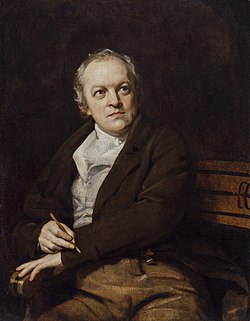
The Fly is a poem written by William Blake, a poet not unknown to music lovers. His poem "The Lamb" has inspired many a composer to write music, and the same holds for another of his poems: "The Tyger".

William Blake

My version of The Fly

Of course "The Fly" has been set to music as well. There's something about Blake's poems that invite people to write music...

I've written something for piano solo (one can sing the words to the music, but in order to protect your sanity, I won't sing in the recording ;) ).

Without further ado, head over to my youtube page:

Enjoy!

Friday, June 29, 2012

Call for contributions: YouCoLeLe Twilight

YouCoWhat?!

Maybe you remember my enthusiastic blog post with respect to tunestorm. Unfortunately, the submission deadline has long passed and the organizers do not seem to find the time to broadcast the submissions. That's not exactly the way to make and keep people enthusiastic - perhaps quite the contrary.

I still very much like the concept of a tunestorm: let a group of people create music around a common theme, each in their own style. As a variation on the tunestorm theme, I thought of trying something similar, from now on called YouCoLeLe.

"YouCoLeLe" is an acronym and stands for Youtube Composer's Legendary League. The idea is for people to create music around a common theme, put that music on a site like Youtube or SoundCloud, and tag it with "YouCoLeLe <Theme>" where <Theme> should be replaced with the theme the music was created for. This way, people can contribute without really having to obey a strict deadline. Nevertheless, each time a new theme is chosen, a target date is set, after which a compilation of "contributions so far" will be made. One important difference with tunestorm is this: even if this blog dies or I don't find time to update it anymore, anyone can still find back the contributions by searching for videos/sound streams tagged with "YouCoLeLe ".

So what's the first theme?

The first theme is Twilight. It's up to you to interpret the assignment as you like. The target date is set to 1 september 2012.

What are the constraints?

I don't want to restrict your creative freedom too much, meaning that you are free to create something that in your opinion illustrates the theme. You are free to chose your instruments or musical style. You can create songs or pieces or soundscapes... whatever floats your boat. For your own sake, just make sure that you have the right to use whatever materials you happen to reuse. Legal reuse of material available under creative commons license is highly recommended by the way: that way the new contributions also become available under creative commons license, and who knows: perhaps someone else will reuse your material in their creation. If you create original work of your own of course you can choose not to release it under a creative commons license (although I would highly recommended for The Greater Good.)

Are you going to keep babbling or can we hear some music?

As it happens (surprise, surprise), I have made an entry for "YouCoLeLe Twilight" which you can hear here:

If you want to play it yourself, you can download the score by clicking on this link. Or you can browse the score (without the poem, due to copyright restrictions) here:

Finally...

Feel free to drop me a note with a link to your contribution. Don't be scared to contribute - it's for fun only. It's not a competition, and the whole thing is not meant to judge your work, although it can be a way to find an audience and a way to get feedback on your work if you are looking for that. Better indicate it explicitly in that case.

Unless big disasters happen I will create a compilation of contributions on this blog after the target date. As I see it now, the contributions would be listed with my personal comments on them (if the author indicated they wanted comments), ordered according to the date on which I became aware of the contribution. Should I forget to do so, feel free to remind me of my promise!

I hope to see (m)any contributions :)

Saturday, May 19, 2012

Concert Announcement: Daydream lullaby.

What?

"Aperitif" concert for mixed choir with instrumental and textual intermezzi. Music from a variety of different style periods and moods.

Where?

Gasthuisberg - Auditorium GA2 - Onderwijs & Navorsing 1 - Herestraat 49 - 3000 Leuven - Belgium.

When?

3rd of june, at 11am

Who?

Choir

Capella Academica, personel choir from Katholieke Universiteit Leuven, conducted by Dieter Staelens.

Presentation

Veerle Foulon

Piano Accompaniment

Annelynn Bailleu

Intermezzi

I will actively participate in this concert: both as a singer and as piano player during the instrumental intermezzi. One of the intermezzi is composed by me: "Meditation" for piano and cello (written on jan 1st 2012, style: Eric Satie meets Philip Glass (I'm modest like that ;) ). The other two intermezzi are written by Philip Gaubert (Divertissement Grec, written in 1908, style: early 20th century, with a touch of impressionism) and Emile Kronke (the first of his "Deux Papillons" op 165, written in 1921, style: early 20th century). The cello will be played by Arthur Spaepen. The flutes will be played by Lotte Goyvaerts and Koen Eneman.

If the music is not enough reason to motivate you, there will be a free reception afterwards...

I want to order tickets!

But of course :-) You can reserve them online using the ticket reservation form. The prices are:
  • € 9: standard price
  • € 7: personel KU Leuven, -18, students, 65+
  • € 6: holders of a culture card
  • € 10: at the entrance, on the day of the concert

Monday, January 2, 2012

Take-off!

Yet another blog?

Yes. I have found that maintaining a blog is a good way to force myself to document some of my musical experiments. It has happened multiple times already that I've created some music and the little evidence that existed of it got lost in computer crashes, or in unreadable binary proprietary file formats of defunct tools. Some of my scores (of which I had only one copy of course :) ) I lended to others but never got back.

What's the purpose of this blog?

I want a place to ponder about music, to brainstorm about music, to discuss some music related tools, perhaps post the occasional tutorial. I also want a place to occasionally link to a musical score or youtube recording I've created.

Musical instruments I frequently use

I own a Yamaha GT2 digital grand piano, which I use because it is easy to record. If I ever win the lottery, I would like to check out the Yamaha Avant N3 which promises a "real piano experience" (whatever that may mean :) )
I use someone else's (ahem!) Roland RA30 for an occasional synth sound.
I've also used software synthesizers like SynAddSubFx or CSound. I have a fazer acoustic piano but I tend not to use it that often since most of my musical activities are concentrated in the very late (or very early - as you please) hours of the day. Fazer is/was a Finnish brand of piano with a very decent quality for a relatively low price. The factory no longer exists. It was bought by Warner music corporation around 1990 who then miss-managed it until it didn't mean anything anymore.
I record most of my audio on a simple but adequate Roland BOSS BR-600 multitrack recorder.

Software tools I frequently use

I have high demands for the tools I use: they must be free ("free" as in "free speech") and open source software, and if possibly also free ("free" as in "free beer") of cost. Luckily there are many high-quality free and open source music tools. I happen to use the linux operating system that has everything (and much more!) a musician could dream about.
  • Typesetting of scores: using the brilliant lilypond program.
  • Postprocessing of audio: using audicity.

Musical styles and influences

I mainly dabble with classical (in a very broad sense) music and I'm not afraid of film, jazz and folk influences. Don't bother talking to me about rock, techno, dance or other similar styles, as I know next to nothing about them and I feel very little motivation to learn more about them. It's not my thing.